
Case Overview
When promoting the game Rainbow Story on platforms such as Douyin, WeChat Official Accounts, and its official game website, the promotional videos not only used a large number of official in-game visuals and assets from MapleStory developed and operated by Shulong Company, but also incorporated numerous advertising slogans in the promotional copy that directly referenced MapleStory.
After discovering that the promotional activities of Rainbow Story were suspected of infringement, Shulong Company, as the operator of MapleStory, filed a civil lawsuit with the Pudong New Area People’s Court of Shanghai (the court of first instance), alleging that the developer of Rainbow Story (hereinafter “Defendant I”) and Douyin Company (hereinafter “Defendant II”) had infringed its copyright and engaged in unfair competition, and requesting that the court order:
Cessation of the infringing acts;
Compensation for economic losses in the amount of RMB 5,000,000;
Compensation for reasonable expenses totaling RMB 221,890;
Publication of a statement on the official website of Rainbow Story to eliminate adverse effects, with the content subject to confirmation by Shulong Company.
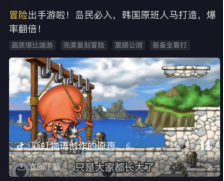 Infringing user acquisition advertisement (Figure 1)
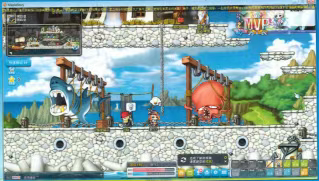 In-game visuals of MapleStory (Figure 2)
Court’s Opinions
(I) Judicial Reasoning
1. Determination of Copyright Infringement
The court of first instance held that certain elements used by Defendant I in the official website, game content, and Douyin advertisements of Rainbow Story were substantially similar to corresponding elements of MapleStory, constituting infringement of Shulong Company’s right of information network dissemination of artistic works.
In addition, the dynamic visuals in the accused advertising videos originated from dynamic visuals of MapleStory, constituting infringement of Shulong Company’s right of information network dissemination of audiovisual works.
Defendant I appealed, arguing that the first-instance judgment’s separate protection of elements in its game and advertisements as artistic works and audiovisual works constituted double protection.
The court of second instance held that it was not improper for the first-instance court to protect the infringed elements of the right holder’s game from both the perspective of artistic works (static visuals) and audiovisual works (dynamic visuals). Moreover, given the unity of the infringing conduct, the first-instance court had comprehensively assessed the overall damage caused by the infringing acts when determining the final damages, and did not inflate damages due to separate categorizations of work types. Therefore, no double protection was established.
2. Determination of Unfair Competition
The court of first instance held that Defendant I’s promotion of Rainbow Story as being “developed by the original Korean team” was factually untrue, as the actual development team was a domestic Chinese team, constituting false commercial advertising.
In addition, Defendant I’s use of promotional phrases such as “continuing the classic adventure” and “the adventure mobile game is here,” combined with the infringing game imagery, implied an association with MapleStory, causing public confusion and misidentification. This conduct constituted unfair competition through false advertising. The court of second instance fully agreed with this determination.
3. Allocation of Infringement Liability
The court of first instance held that Defendant I, having committed acts infringing Shulong Company’s copyright and engaging in unfair competition, should bear civil liabilities including cessation of infringement, elimination of adverse effects, and compensation for losses.
Defendant II, as a network service provider, was found not at fault and therefore did not bear infringement liability. Neither defendant raised objections to this finding.
4. Determination of Damages
As Shulong Company’s actual losses, Defendant I’s illegal gains, and reasonable license fees could not be ascertained, the court of first instance applied statutory damages, comprehensively considering factors including:
the notoriety of MapleStory;
the originality of the works involved;
the manner and consequences of the infringing acts;
the proportion of infringing content;
the manner and impact of false advertising;
the operation period of Rainbow Story and the duration of the advertisements;
game download volume;
Defendant I’s subjective fault.
The court also supported Shulong Company’s claims for reasonable expenses such as notarization fees and attorney’s fees.
Defendant I appealed, arguing that the prerequisite for applying statutory damages was incorrect, claiming that it had submitted evidence showing Douyin advertising revenue of only RMB 49,923, which should have been used as the basis for damages. The court of second instance held that Defendant I’s evidence failed to prove its relevance to the accused advertisements or that it reflected total revenue, and therefore rejected this argument.
Defendant I further argued that referencing the download volume of Rainbow Story to determine damages was unreasonable. The court of second instance held that although the scope of infringing elements was limited, Defendant I had leveraged the notoriety of MapleStory to attract players, and factors such as download volume were appropriate considerations in determining damages. The original judgment was therefore upheld.
(II) Judgment Result
The court ruled as follows:
Defendant I shall cease infringement of artistic work copyrights and unfair competition acts;
Defendant I shall publish a public statement on the official website of Rainbow Story for 15 consecutive days;
Defendant I shall compensate RMB 1,000,000 in economic losses and RMB 221,890 in reasonable expenses.
Analysis and Practical Takeaways from Litigation Experience
(I) Determination of Jurisdiction
In this case, Defendant I twice raised jurisdictional objections, attempting to transfer the case to the people’s court at its domicile.
However, pursuant to Articles 24 and 25 of the Interpretation of the Supreme People’s Court on the Application of the Civil Procedure Law of the People’s Republic of China, courts at the domicile of the infringed party may exercise jurisdiction over information network infringement cases. Accordingly, the jurisdictional objections were rejected.
In such cases, rights holders may consider filing lawsuits in courts at their own domicile, which facilitates efficient rights enforcement, reduces litigation costs, enhances communication with legal counsel, and enables deeper participation throughout the litigation process.
(II) Evidentiary Strategies for Rights Holders
1. Multi-Dimensional Proof of Access
Copyright infringement follows the rule of “access + substantial similarity.” Where both parties operate in the same industry, there is already a high likelihood of access to the copyrighted work. Additional evidence may include the notoriety of the copyrighted work, or proof that both parties participated in the same award selections or industry events.
When statutory damages are applied, the notoriety of the copyrighted work is also a key factor influencing the amount of compensation.
 Notoriety may be proven through game rankings, media reports, awards, and search engine indices.
2. Offensive and Defensive Proof of Similarity
Although both access and substantial similarity are indispensable, disputes in practice often focus on substantial similarity.
Rights holders should present similarity evidence through a combination of image comparisons and textual explanations. Visual comparisons enable judges to intuitively perceive similarities, while textual explanations guide judicial focus and reduce subjective interpretation variance.
 For example, in the case Sheep a Sheep vs. Numb a Numb [Case No. (2023) Jing 0491 Min Chu 7027], the plaintiff adopted this evidentiary approach, transforming evidence into both an offensive weapon to prove infringement and a defensive shield against claims of dissimilarity.
 Accordingly, rights holders must meticulously prepare image comparisons. For static visuals, representative elements should be captured in high resolution to demonstrate character design, scene layout, color schemes, and line usage. For dynamic visuals, professional video capture tools should be used to extract representative frames, enabling comprehensive comparison of narrative development, motion design, and visual effects.
3. Comprehensive Evidence of Infringing Conduct
Rights holders must conduct comprehensive evidence collection across all platforms where infringement occurs, documenting promotional content, forms, dissemination scope, and duration. Through notarization, screenshots, recordings, and data analysis, a complete evidentiary chain should be constructed.
 In this case, had Shulong Company only collected evidence of infringing advertisements on Douyin and not on WeChat or the official website, Defendant I’s low Douyin advertising revenue might have had a greater impact on damages, potentially leading the court to reduce compensation.
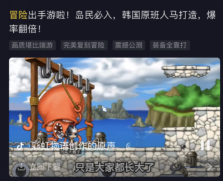 侵权买量广告(图一)
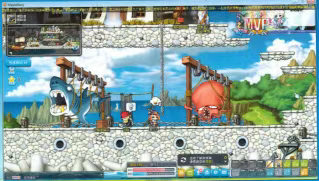 《冒险岛》运行画面(图二)

 (《羊了个羊》vs《麻了个麻》的案件中相似内容比对的图例)